
Akwaaba!
Yɛ dasi ne nswra.
Yɛn ani agye mo ntoboa wɔ taa a motaa yɛn akyi wɔ yɛn dwuma a yɛredi yi mu. Yɛde mo adwene ne mo ntoboa akɔ adwennwene mu ahunu sɛ yɛde bi ka ho a ɛbɛma yɛatu mpɔn.
Sɛ mopɛ sɛ motɔ Nkrataa yi bi a, momfrɛ yɛn wɔ ahomatorofoɔ yi so. Download.
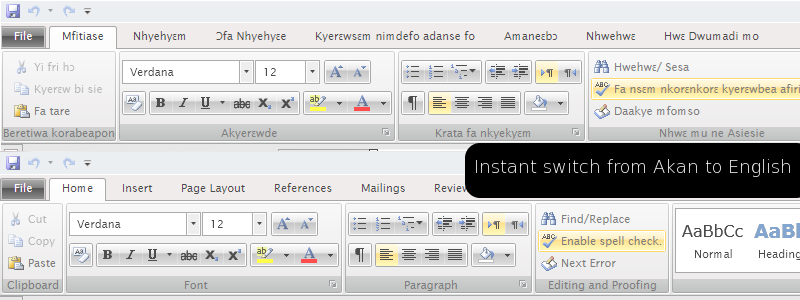
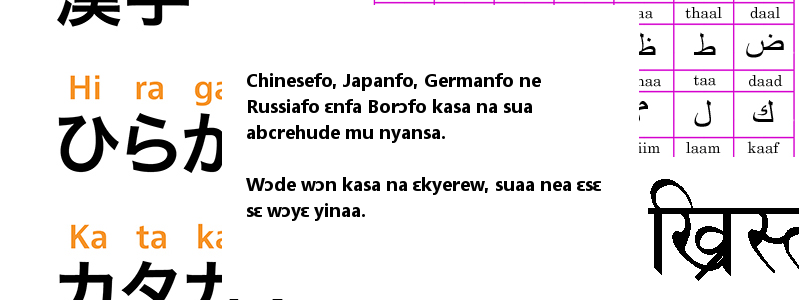
This is the official website for Nkrataa, the digital language studio for the Akan group of languages. Nkrataa is designed for the windows and Linux/ UNIX operating systems. Crucially, Nkrataa is Free to download and use in its basic form for private users. We hope Nkrataa will help educators, writers, administrators, students, parents, journalists, business people and communicators.
We strongly believe here at Nkrataa that, using English instead of our mother tounge in our education and communication is at the root of our many problems as a people. No country on Earth has developed and earned the respect of other countries as an equal on the world stage using a half adopted foreign language! Language is critical to the developement of our children and the health of our societies; its never too late to start making a start on reparing the damage.
Download, use Nkrataa and tell others about it.
Akan Language

Until recent times, literacy in TWI was synonymous with literacy in Akuapem Twi. This was due to the work of the Basel Missionaries who introduced Christianity to the area and developed the a written character set for the language in 1842.
Most of the consonant sounds in Akan are similar to those in English. The difficult sounds are those represented by the digraphs below.
kw : sounds like 'qu' as queen.
hy : sounds like 'sh' as in she.
ky : sounds like 'ch' as in cheap.
gy : sounds like 'j' as in jeep.
ny : sounds like the Spanish word manana.
dw : sounds like 'jw' when 'j' and 'w' are rapidly articulated together without an intervening vowel. Very similar to the pronunciation of Jew.
tw : sounds like 'ch' and 'w' in catch wind or choo choo when these two sounds are rapidly articulated together without an intervening vowel. For example Twi is pronounced chwi.
hw : sounds like 'sh' and 'w' when these two sounds are rapidly articulated together without an intervening vowel.
nw : sounds like 'n' and 'we' when these two sounds are rapidly articulated together without an intervening vowel.
a : is pronounced as ( a as in charter, e.g., fa to take) or ( a as in take, e.g., aburow which means corn)
i : is articulated like the vowel sound in Sea.
e : is pronounced as( i as in sit, e.g., te meaning sat ) or ( e as in her, e.g., efrisɛ which means because)
ɛ : is articulated like the vowel sound in bear.
u : is pronounced as the vowel in mood.
o : is pronounced as (u as in put, e.g., tomu meaning lock) or ( o as in go, e.g., obi meaning someone)
ɔ : is articulated like the vowel sound in four.
Mother tongue
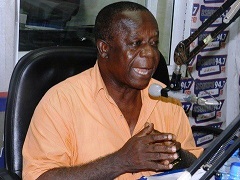
An educationist Michael Nsowah says Education Minister, Jane Naana Opoku-Agyeman’s call for Ghanaian children to be taught in local languages is in the right direction.
Mr Nsowah who is a former Director-General of the Ghana Education Service, says research has proven children are able to learn faster when they are taught in languages they play with.
Learn Akan Online
Learn Akan online by practicing with a native speaker who is learning your language. Write or speak Akan online to improve grammar or conversation.
A language exchange complements other forms of learning such as classroom, cultural immersion and multimedia, because you get to practice all that you have learned with native speakers in a safe and supportive environment.